

Retail sales are expected to climb again this year. The National Retail Federation projecting 4.4% growth in 2026 to $5.6 trillion nationwide. That growth sounds like good news until you’re the district manager staring at an empty schedule two weeks before Black Friday.
The seasonal labor pool that used to bail retailers out every fall is shrinking.
NRF reported seasonal hiring dropped from 442,000 hires the prior year to a projected range of just 265,000 to 365,000. Fewer available workers, higher sales targets. That math doesn’t work in your favor if you wait until October to figure it out.
InDemand Services exists to close that gap before it opens, through Store Operations Support teams that scale nationwide, months ahead of peak season. Here’s why waiting is the riskiest move a retailer can make, and what early planning actually looks like in practice.
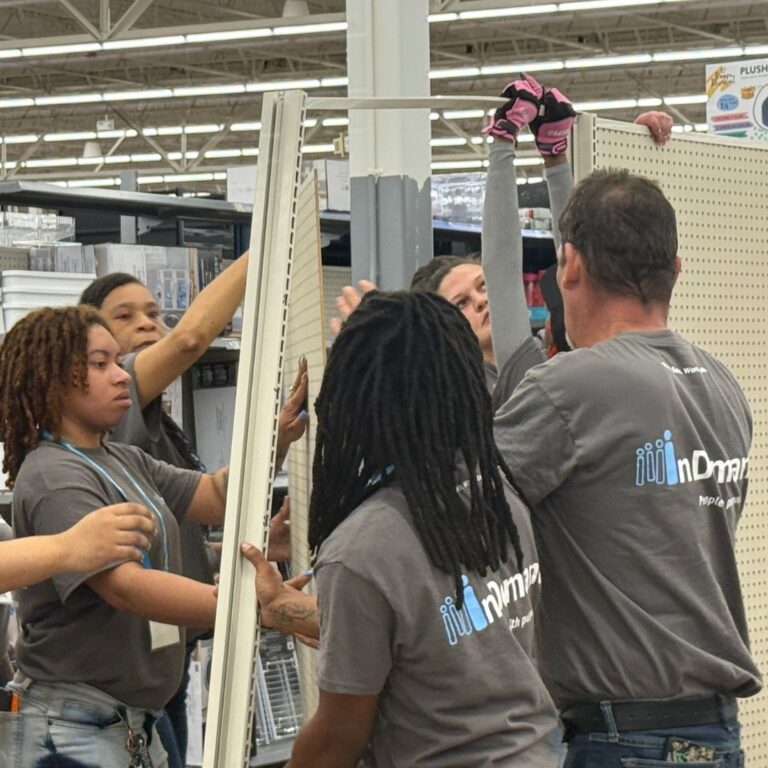
Retailers aren’t just competing with each other for seasonal workers anymore. They’re competing with a labor market that’s supplying fewer seasonal hires year after year.
That shift means the old playbook of posting jobs in October and hoping for the best no longer works.
Federal data backs this up: during the 2022-2024 holiday buildups, retailers added an average of 475,000 seasonal employees, down from an average of 605,000 during 2018-2021.
That’s a meaningful drop in available labor at exactly the moment sales volume keeps rising. Waiting until Q4 to start recruiting means competing for a smaller pool with everyone else who waited too.
For multi-store operators, that shortfall compounds fast, since even a handful of unfilled shifts per location adds up to a significant labor gap across a district or region.
Even when retailers succeed at hiring seasonal staff, keeping them through the season is its own battle. Retail already runs one of the highest turnover rates of any industry, and the numbers get worse under peak-season pressure.
A seasonal hire who walks away in week three leaves you right back where you started, except now it’s December instead of September.
As of March 2026, the average total separations rate for retail sat at 4.1%, compared to 3.0% across all sectors, according to BLS data.
Translate that to a store floor: train someone two weeks, and they’re gone before Christmas Eve rush.
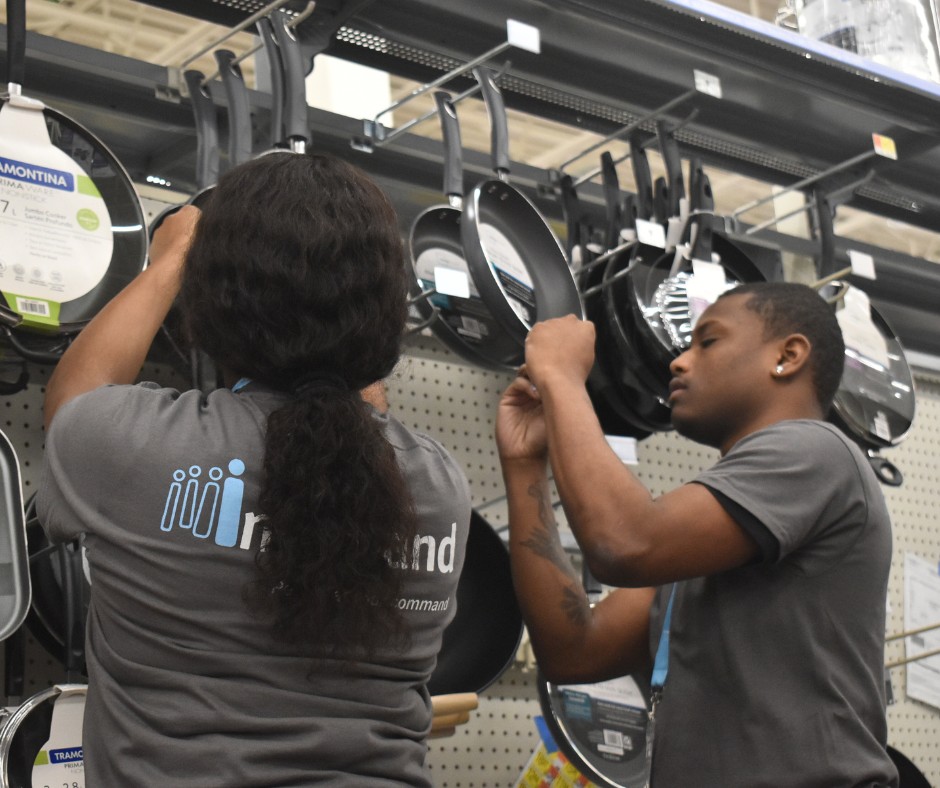
When seasonal staffing falls short, the burden doesn’t disappear. It lands on your existing team. Managers start covering shifts themselves, and tenured associates get pulled from the tasks they’re best at just to keep the store running.
Industry research shows roughly 30% of retail workers have logged overtime just to keep pace with demand and keep shelves stocked. That overtime bill adds up fast, but the bigger cost is what it does to your best people.
Core staff pulled into truck unloads and restocking during peak weeks are staff not available for the customers who are actually walking through the door during the busiest shopping season of the year. Over enough weeks, that strain shows up in mistakes, sick days, and associates who quietly start looking for a less chaotic place to work.
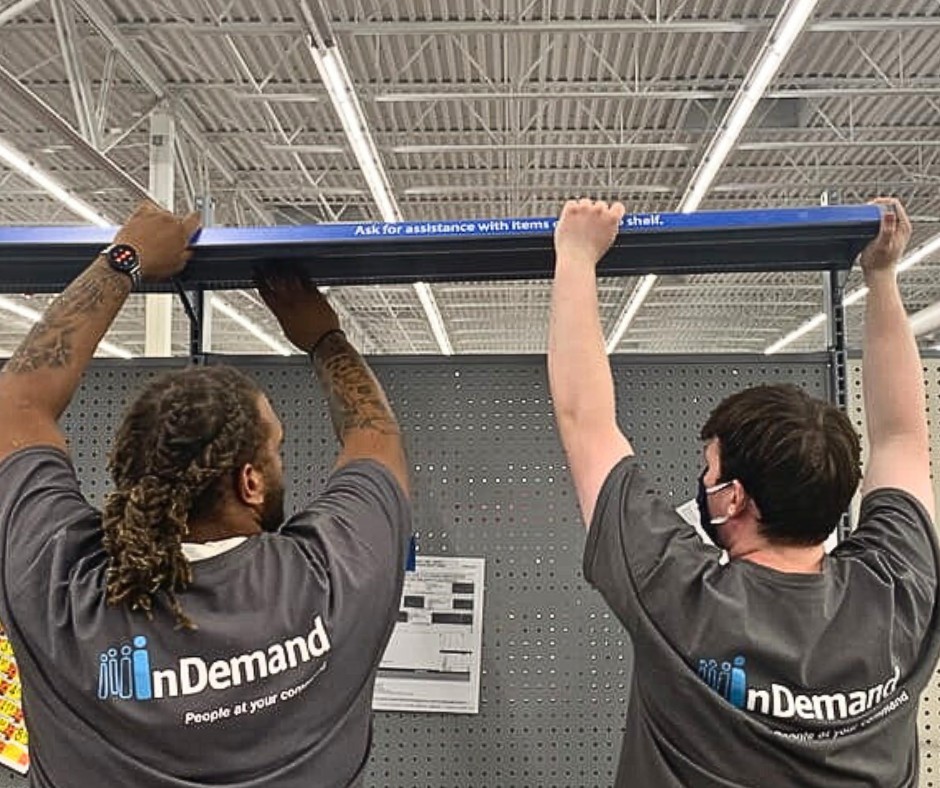
Picture a regional manager overseeing 18 stores heading into the second week of December.
Three seasonal roles go unfilled at each location, which adds up to 54 open shifts across the district in the busiest stretch of the year.
Store managers start breaking down freight themselves instead of walking the floor, top-performing sales associates get pulled into the stockroom, and checkout lines back up because there’s no one left to run a register.
What should have been the highest-revenue week of the year turns into a week of just trying to keep the doors running…
Retailers don’t need more last-minute hiring. They need an operational staffing partner that can scale alongside demand before the holiday rush even begins. That’s where InDemand Services steps in, months before the rush starts.
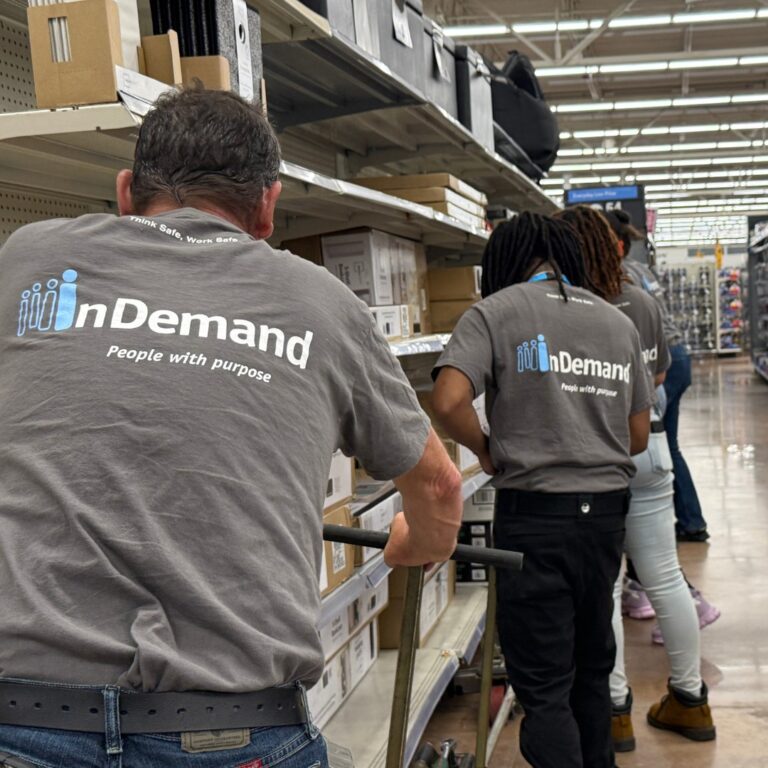
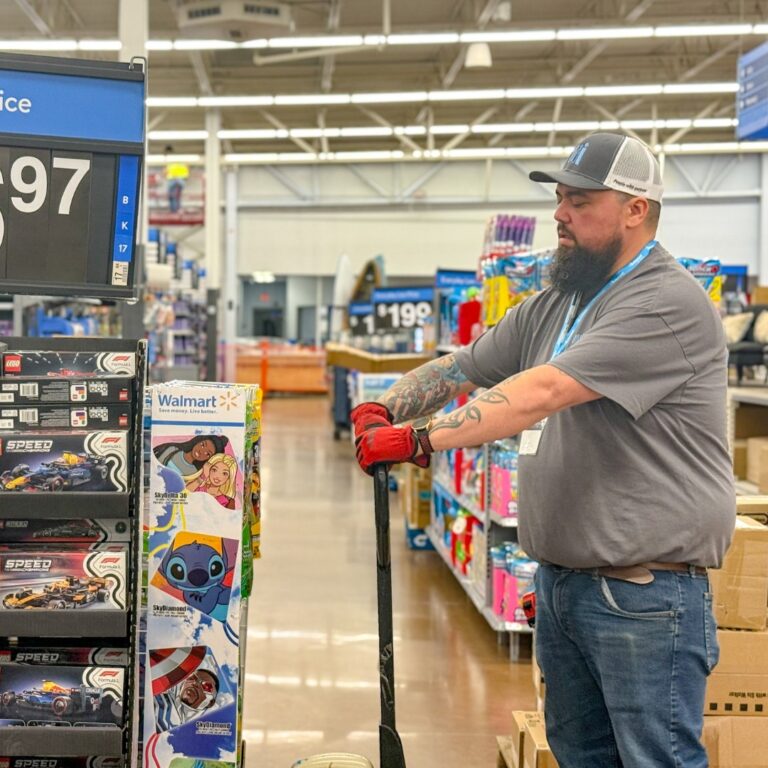
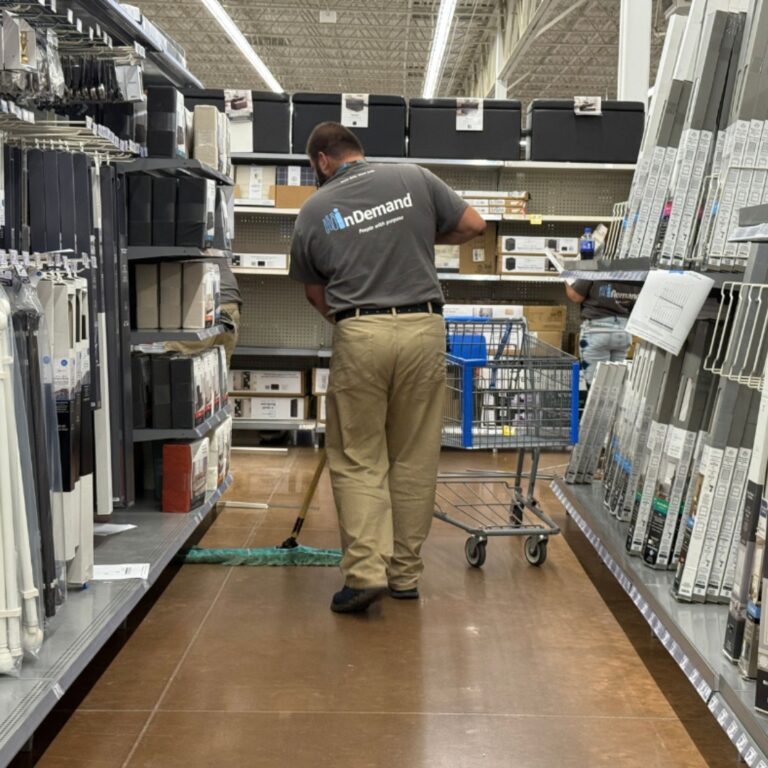
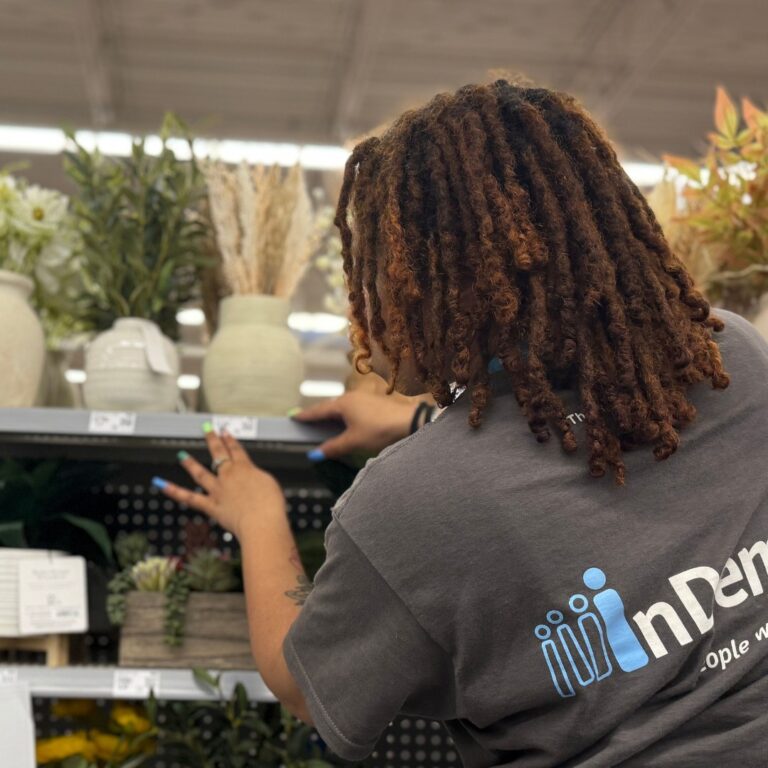
IDS builds and deploys Store Operations Support teams that handle the physical, time-sensitive work, truck unloads, stocking, apparel, produce, cart retrieval, cashier support, custodial support, and more, so your core employees stay focused on customers instead of pallets.
IDS has spent years mastering the processes behind large-scale retail operations. That expertise is why retailers like Walmart trust IDS with truck unloads, resets, and stocking work during the highest-pressure weeks of the year. This isn’t a theoretical service. It’s what IDS does every day, at scale, for retailers who can’t afford to get it wrong.
Here’s what makes this different from a typical staffing agency call in September:
The goal isn’t just filling shifts. It’s taking the operational load off your team’s hands early enough that your core staff walks into Q4 rested, focused, and free to do the customer-facing work that actually drives sales.
The earlier the better. Waiting until October puts you in competition for a shrinking seasonal labor pool at the exact moment demand peaks. Engaging a staffing partner in the summer or early fall gives enough runway to build before the rush actually hits.
IDS builds staffing plans around your actual store operations, not a generic labor pool. That means consistent, high-quality standards, dedicated account management, and a workforce structure built for accountability across every location, so you know exactly who’s showing up and how they were prepared.
Yes. IDS builds Store Operations Support teams sized to the actual need at each location and adjusts headcount as demand shifts week to week, rather than locking retailers into a fixed team that doesn’t flex with real-time sales volume.
Both. IDS builds teams as large or as small as a location requires, and coordinates staffing nationwide through a single account management structure, whether you’re supporting one store or a multi-region operation.
Q4 doesn’t have to be a staffing emergency every year.
The retailers who come out of the holidays ahead are the ones who lock in their staffing plan while everyone else is still hoping for the best.
IDS helps retail teams build a scalable staffing plan before the rush hits, not after.
The sooner you start the conversation, the more prepared your stores will be when the season actually arrives.
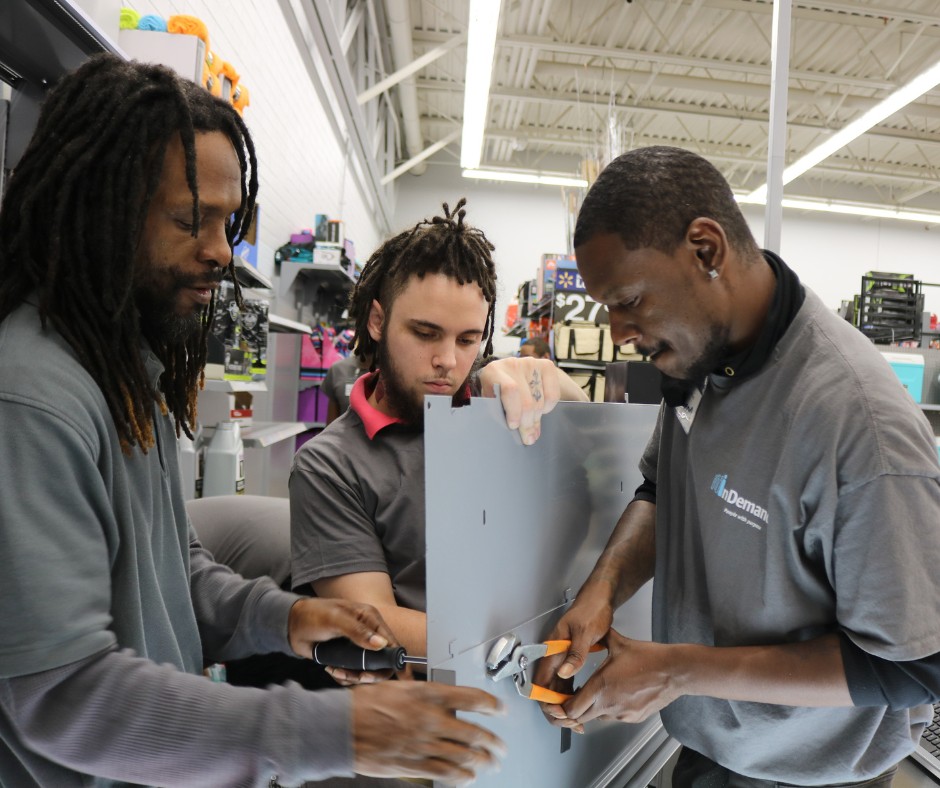
InDemand Services is a retail workforce staffing company headquartered in Raleigh, NC. With W-2 workers, real-time project tracking through Cruxos, and dedicated account management, InDemand helps retail operators execute peak season work without overloading their core teams. People With Purpose.
We use cookies to improve your experience on our site. By using our site, you consent to cookies.
Manage your cookie preferences below:
Essential cookies enable basic functions and are necessary for the proper function of the website.
These cookies are needed for adding comments on this website.
Google reCAPTCHA helps protect websites from spam and abuse by verifying user interactions through challenges.
Statistics cookies collect information anonymously. This information helps us understand how visitors use our website.
Google Analytics is a powerful tool that tracks and analyzes website traffic for informed marketing decisions.
Service URL: policies.google.com (opens in a new window)
Marketing cookies are used to follow visitors to websites. The intention is to show ads that are relevant and engaging to the individual user.
A video-sharing platform for users to upload, view, and share videos across various genres and topics.
Service URL: www.youtube.com (opens in a new window)
You can find more information in our Cookie Policy and .