

Retail isn’t dealing with a single peak anymore. It’s dealing with a stack of them.
NRF now forecasts 2026 retail sales will grow 4.4% to $5.6 trillion. That’s faster than the 3.6% average retail has posted each year over the last decade.
This demand doesn’t show up in one tidy wave in December. It builds through back-to-school, holds through fall resets, and rolls straight into the holidays with no real break in between.
That’s exactly the gap that InDemand Services was built to close. InDemand gives retailers extra, reliable workforce support so a busy season doesn’t turn into a breaking point.
Here’s why the pressure keeps building instead of easing off. PwC’s latest holiday spending data shows average spend per shopper climbing to $7,834 for the quarter, up from $7,591 last year.
That growth is spread across October, November, and December, not packed into one big event. A staffing plan built for a single busy week simply can’t stretch across a full quarter of steady, heavy demand.
That’s the real question retailers face heading into September 2026: not how to survive one big day, but how to keep a workforce running strong for months at a time.
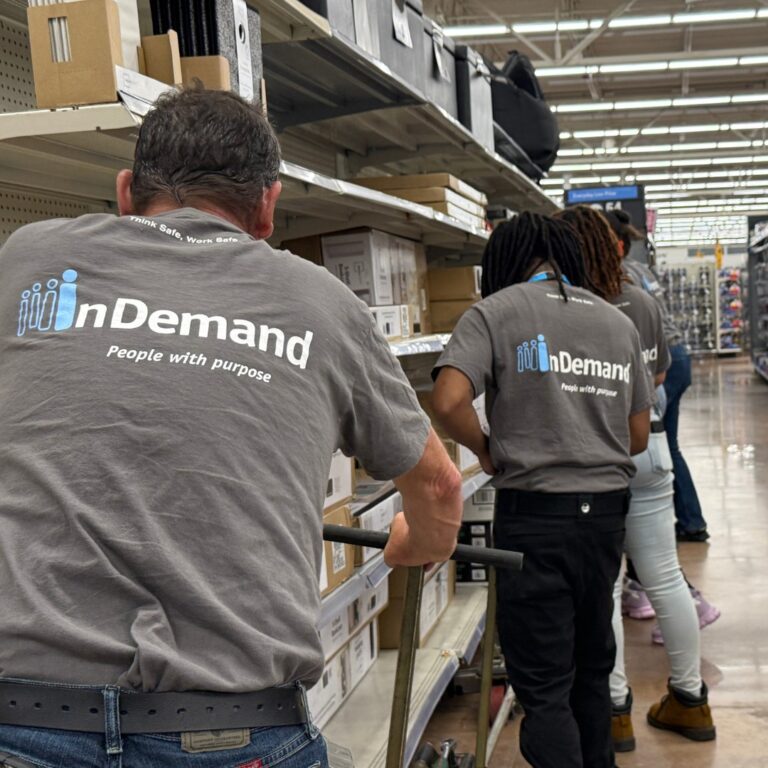
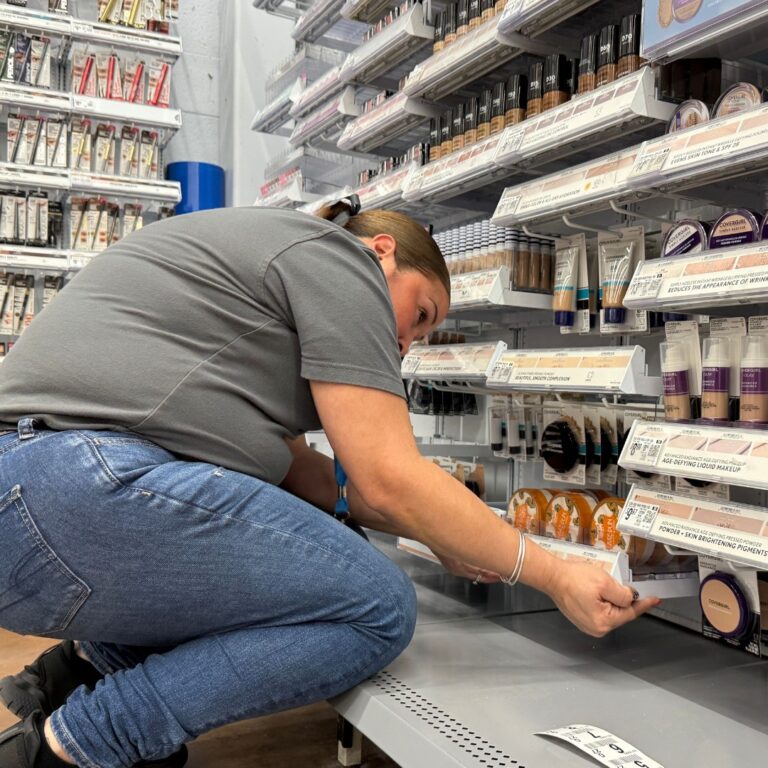
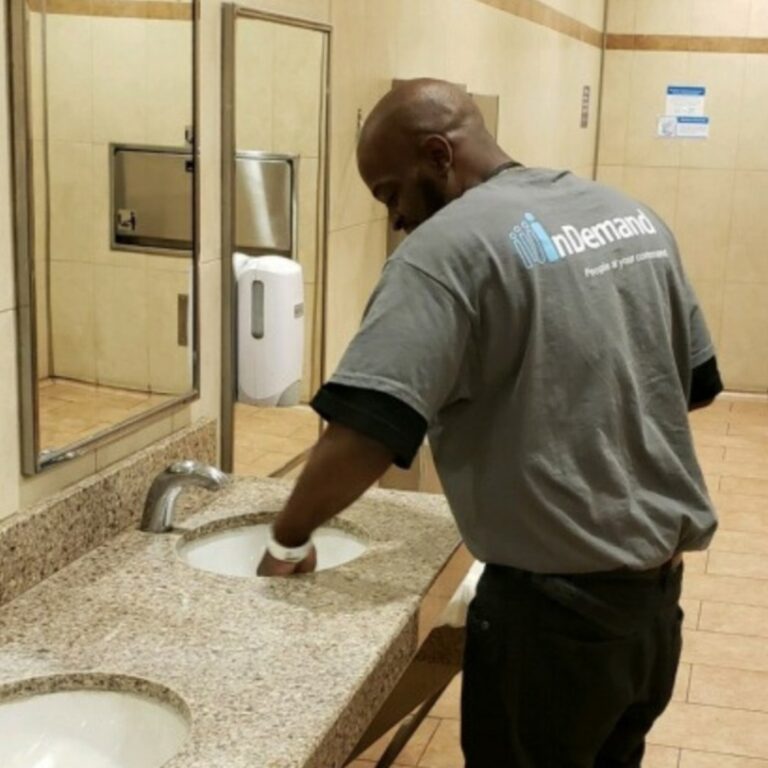
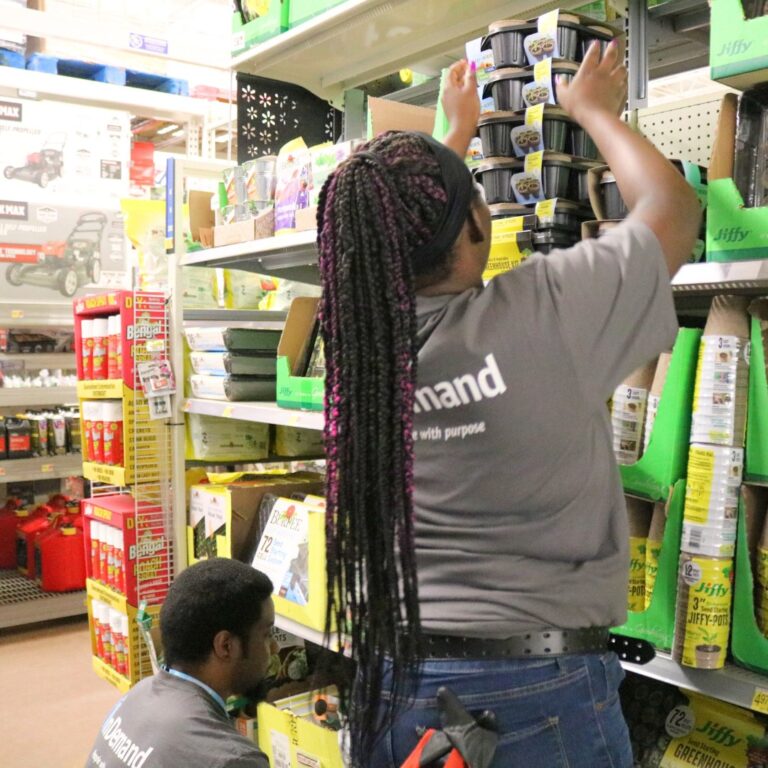
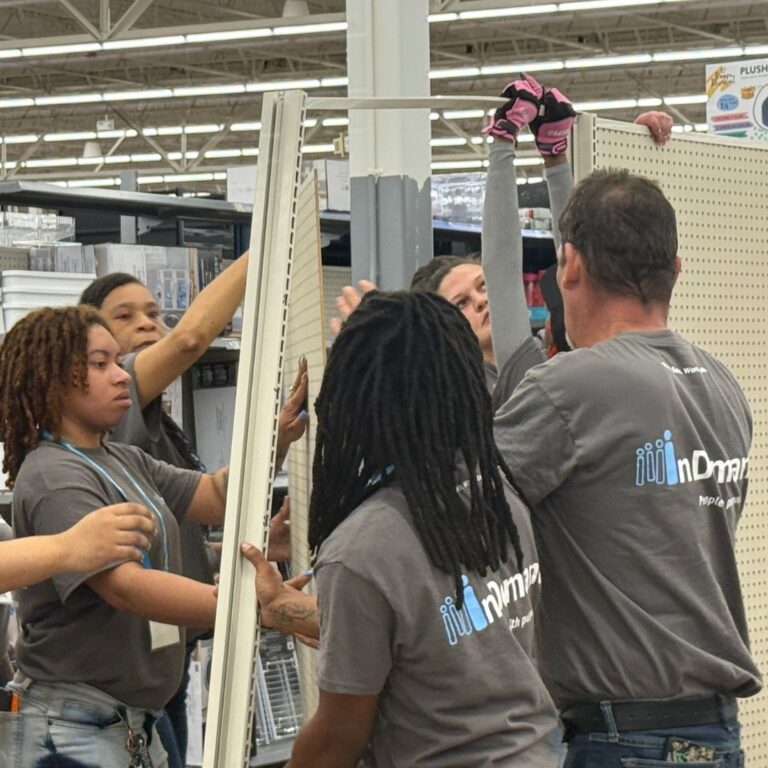
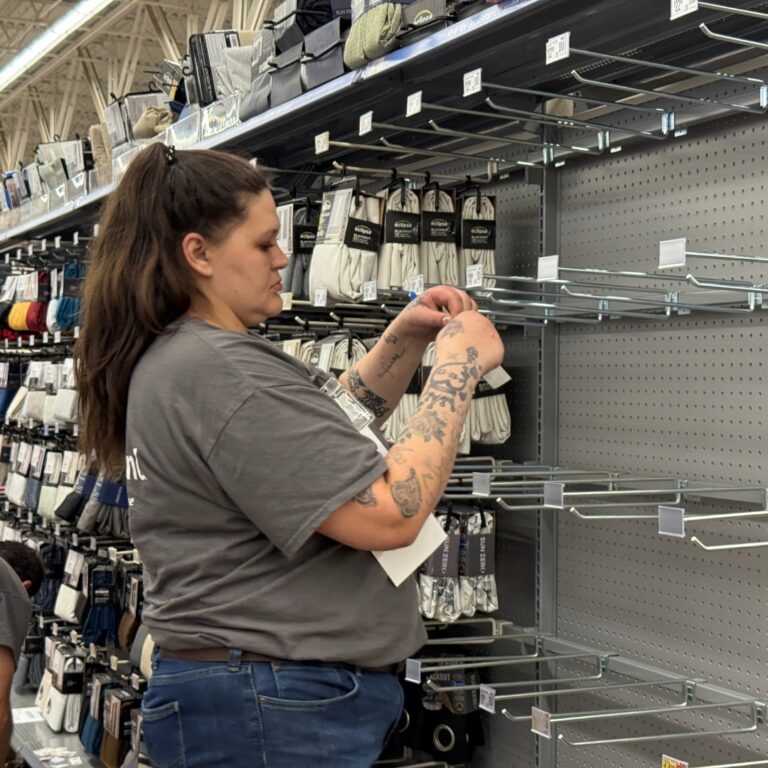
Most in-house staffing plans aren’t built to run at full capacity for months. They’re built around a single hiring event. A handful of extra workers come on for a few weeks, then leave. Sustained demand doesn’t work that way, and the cracks show up fast.
A recent Logile survey asked frontline retail associates about this directly. It found that 51% say their store is short-staffed during busy periods most of the time. A quarter said it happens almost every time the store gets busy. The same survey found 77% of associates believe their store regularly loses sales because of poor scheduling.
That’s not a one-week problem. That’s a system that was never built to hold steady once demand runs past a few weeks.
Understaffing doesn’t just slow things down. It also drives more people to quit, which makes the understaffing worse.
As of May 2026, close to 4 out of every 100 retail workers left their job that month. That number has stayed high for a while now, even though hiring and quitting have slowed down across most other industries.
Every time someone leaves during a busy season, that spot has to get filled right away, and the new hire usually gets less training than the last person did. That gap costs real money.
Replacing one frontline retail employee costs retailers nearly $10,000 on average, according to McKinsey’s frontline retail research.
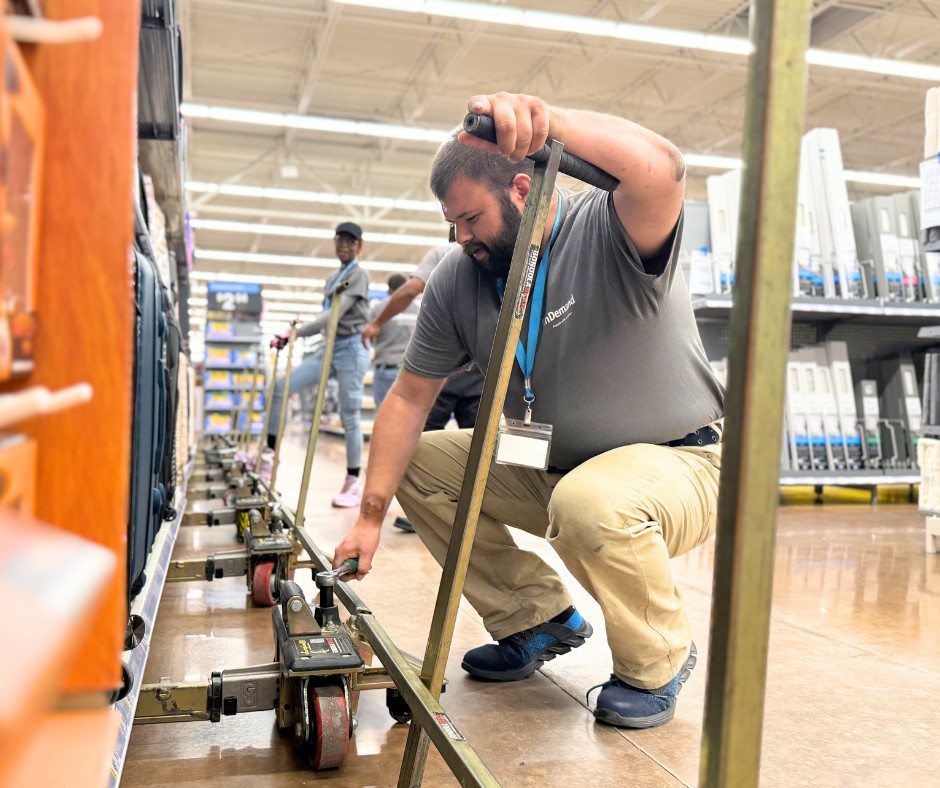
That figure covers recruiting, training, and the productivity lost while a new hire ramps up. Multiply that across a district running six or seven understaffed stores, and the cost adds up fast.
Gallup puts the national toll even higher, estimating that voluntary turnover costs U.S. businesses roughly $1 trillion every year. Without a staffing system built to hold steady, retailers aren’t just short-handed. They’re losing money every time someone walks out mid-season.
Without outside help, this is usually where regional leadership stops leading and starts putting out fires. Deadlines get pushed back. Store visits turn into damage control. A district manager who should be walking the floor and coaching the team ends up on the phone all day trying to find someone, anyone, to cover tomorrow’s shift. That’s not a small staffing gap. That’s a system in freefall, and it’s avoidable.
The pressure isn’t limited to the sales floor either. Deloitte’s Retail Report 2026 found that 61% of consumers still see physical stores as their top shopping channel. At the same time, more than half expect at least 20% of their holiday shopping to happen online.
Stores now need enough staff to handle in-person traffic, online order fulfillment, and handle online pickup and in-store pickups, all at once, for the full length of the season.
A staffing plan built around one big event can’t flex across that kind of layered demand. When online orders spike alongside in-store traffic, something has to give. Usually, it’s either fulfillment speed or the in-store customer experience. Neither one is acceptable during the season that matters most.
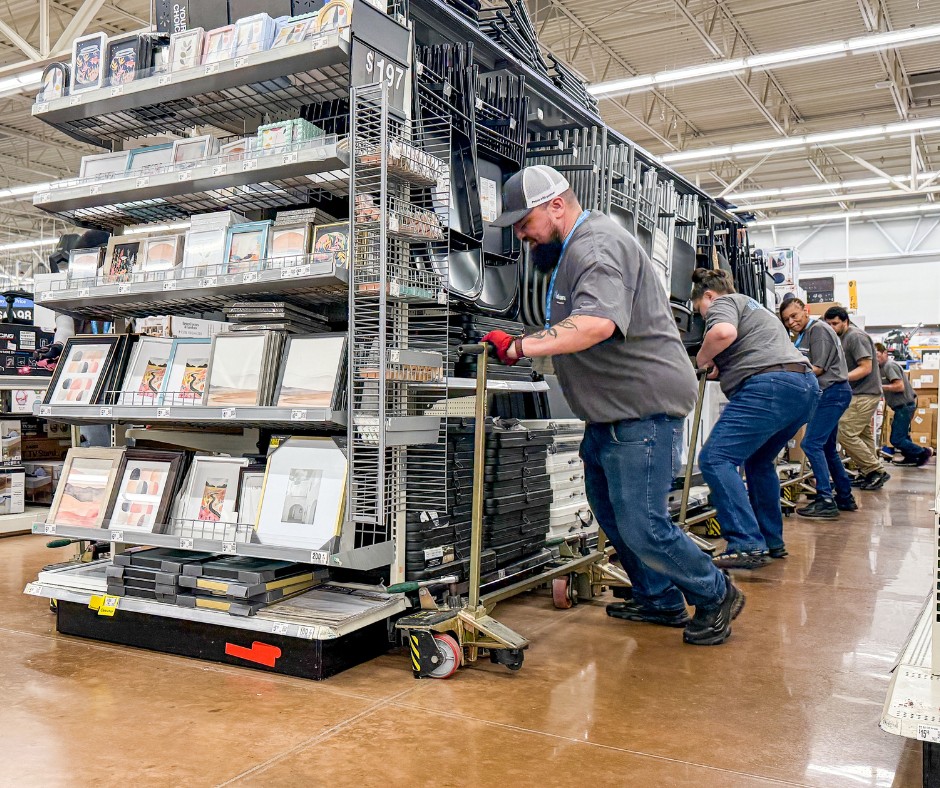
The retailers who come through a sustained peak in good shape usually share one thing: workforce consistency.
Gallup’s engagement research has repeatedly found that business units in the top quartile of engagement outperform the bottom quartile by 23% in profitability, 18% in sales productivity, and 10% in customer loyalty.
A rotating cast of last-minute hires can’t deliver that kind of consistency. A dedicated team that’s been vetted and managed for exactly this kind of work can.
That’s the gap InDemand Services closes. IDS provides staffing across four service lines, Light Industrial and Warehouse, Store Operations Support, Project Support, and Custodial Support.
With InDemand Services, retailers can bring in the right kind of crew for the right kind of surge instead of stretching one internal team across every need at once.
A staffing system that survives a sustained peak needs three things: flexible labor, real visibility, and a partner who understands retail operations specifically. IDS was built around all three.
Every crew member goes through the same vetting process before stepping onto a sales floor or into a distribution center. That means retailers get consistent, reliable work instead of a new unknown every time volume spikes. Crews also scale up or down across stores and regions at the same time. A chain running resets in Charlotte and truck unload support in Tampa in the same week doesn’t have to choose which location gets covered.
Visibility is the piece most internal systems are missing. IDS tracks every engagement in real time through its own platform, Cruxos. Regional and district leaders can see live headcount, progress, and billing across every location, not just the stores they can physically visit. That means leadership can spot a staffing gap three states away before it turns into a missed shift, instead of finding out after the damage is done.
Dedicated account management ties the whole system together. Instead of a district manager coordinating temp agencies on top of their regular job, IDS assigns a point of contact who manages execution across every engagement, so retail leadership can focus on running stores instead of running a staffing operation on the side.
Retailers partnering with InDemand through a sustained peak season get:
Curious what that looks like across your footprint? Learn more about InDemand Services and the teams behind the work.
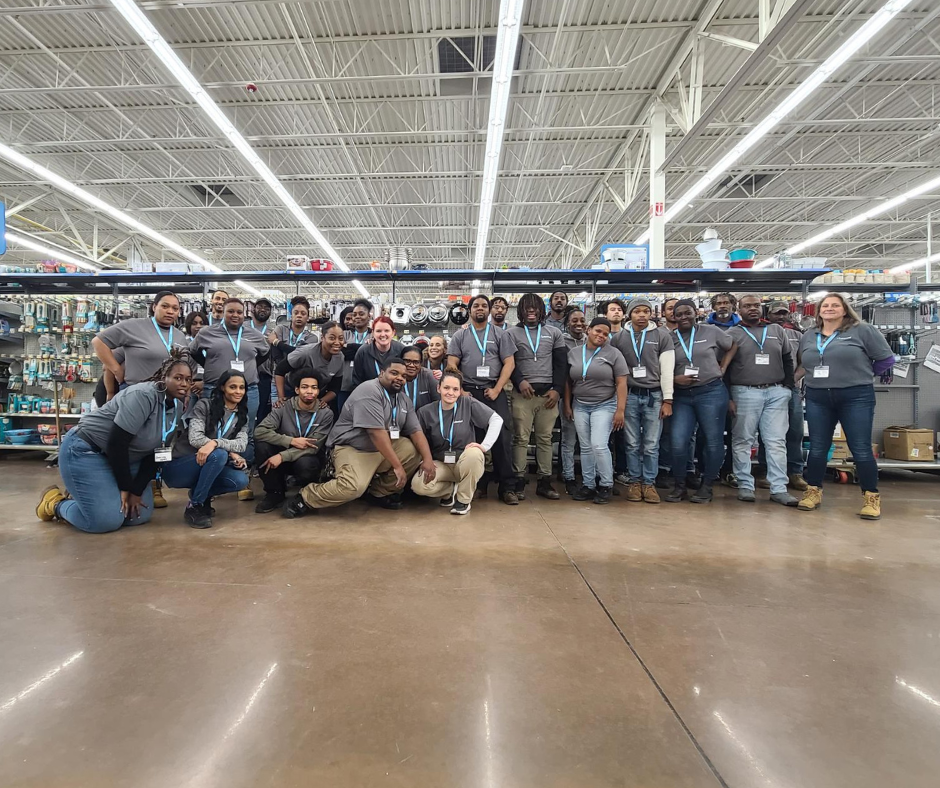
Sustained demand isn’t a temporary condition anymore. It’s the operating environment retailers should expect every year going forward. The question isn’t whether volume will stay high for months at a time. It’s whether the staffing system underneath it can hold.
IDS gives retail operators a system built to hold, with vetted crews, real-time visibility through Cruxos, and dedicated account management across every service line.
Reach out today to talk through what a staffing plan with InDemand could look like for your stores heading into the rest of 2026.
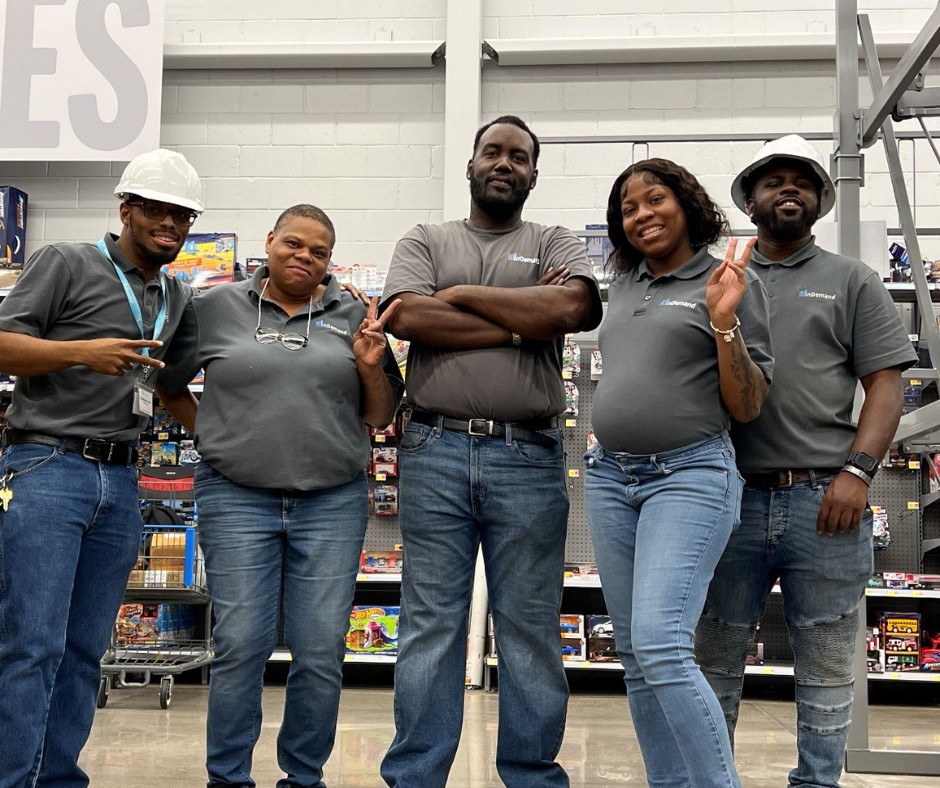
InDemand Services is a retail workforce staffing company headquartered in Raleigh, NC. With dedicated workers, real-time project tracking through Cruxos, and extensive account management, InDemand helps retail operators execute peak season work without overloading their core teams. People With Purpose.
We use cookies to improve your experience on our site. By using our site, you consent to cookies.
Manage your cookie preferences below:
Essential cookies enable basic functions and are necessary for the proper function of the website.
These cookies are needed for adding comments on this website.
Google reCAPTCHA helps protect websites from spam and abuse by verifying user interactions through challenges.
Statistics cookies collect information anonymously. This information helps us understand how visitors use our website.
Google Analytics is a powerful tool that tracks and analyzes website traffic for informed marketing decisions.
Service URL: policies.google.com (opens in a new window)
Marketing cookies are used to follow visitors to websites. The intention is to show ads that are relevant and engaging to the individual user.
A video-sharing platform for users to upload, view, and share videos across various genres and topics.
Service URL: www.youtube.com (opens in a new window)
You can find more information in our Cookie Policy and .